Five Clocks, One Story: The UK Opening-Hours Check That Stops Wasted Calls

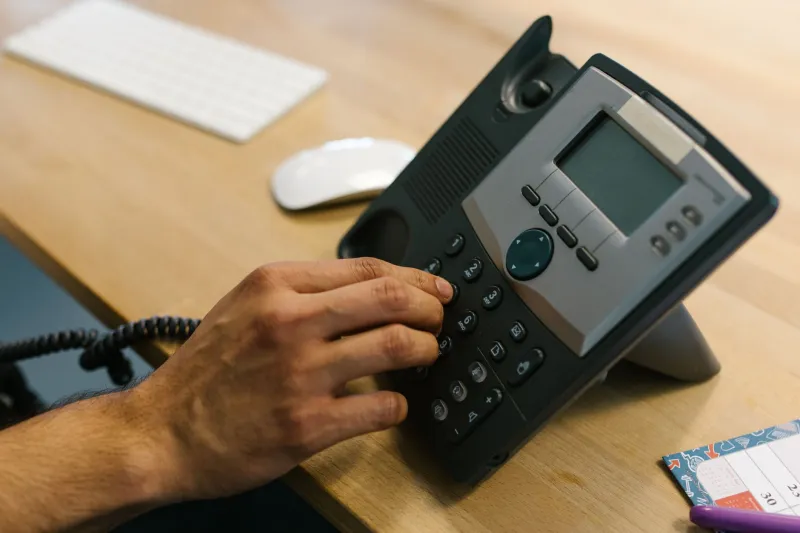
Photo: Francisclarke, CC BY-SA 4.0, via Wikimedia Commons
It is 9.02 on a Monday. A customer checks your website, sees 9am, and rings. Your phone system answers with a voicemail that says you open at 9.30. They leave a short, slightly annoyed message and then ring the next firm on their list.
Nothing dramatic has happened. No line has failed. No member of staff has been rude. But two clocks have just told two different stories, and the caller has drawn a conclusion: this company does not know its own hours.
Opening hours are not a single fact. They are a repeated claim. You make that claim on your website, on Google, in your phone menu, in your voicemail, and in the rota that decides whether anyone is actually there to pick up. When those five clocks agree, the phone feels calm and competent. When they disagree, UK callers do what UK callers do: apologise quietly, hang up, and go elsewhere.
The five clocks that matter
1. The website and contact page. This is the version you control most easily, which is exactly why it drifts. Someone updates the Christmas hours in December 2026 and forgets to remove them in January. Or the contact page still says 8.30am because that was true when the office was in the old building.
2. Google Business Profile and map listings. The hours panel on Google is often the first thing a caller sees, especially on a mobile. If it says open at 8am but your phone greeting says 9am, the caller trusts the one that let them down.
3. The IVR greeting. The recorded voice that answers before a human. It may say 'our office is open Monday to Friday, 9 to 5' even when the switchboard closes at 4.30. A greeting is not background music. It is a promise.
4. The voicemail or out-of-hours message. This is the safety net. If it is vague — 'please call during office hours' — the caller has to guess. If it is specific but wrong, they stop guessing and start doubting.
5. The staff rota and the actual pickup. The quietest clock. The website can say 8.30, but if the first person arrives at 8.45, the phone tells the truth. The rota is where opening hours become real.
Honourable mentions go to social media bios, email footers, printed leaflets and the sign on the door. They count too, but start with the five above.
Why a small mismatch causes a big leak
Say your website says 9am and your voicemail says 9.30. A caller rings at 9.05. They hear the closed message and assume nobody is in. They do not ring back at 9.35, because they are now on a train, in a meeting, or ringing a competitor. That is a failed call, even though your line was working perfectly.
Or the reverse: your website says 5pm, your rota ends at 4.30, and the phone rings at 4.45. The caller gets an open greeting and then an unanswered ring. That is worse than a closed message. A closed message manages expectations. An unanswered ring suggests you have gone home early.
The cost is not just the missed call. It is the story the caller tells afterwards. In the UK, we are quite forgiving about a lunch closure or a bank holiday. We are less forgiving about being told one thing and experiencing another.
The autumn clock change makes this worse. The clocks went back on 25 October 2026, so any contact page still saying '9am BST' is now technically wrong. Most people will not notice. The ones who do are often the ones who care about detail — the exact people you want as customers.
The twenty-minute five-clock audit
You do not need a consultant or a new phone system. You need a quiet slot, a phone that is not the main switchboard, and a blank note.
- Pick a normal weekday. Avoid a bank holiday, a training day, or the day after a big launch.
- Write down the exact wording from all five places. Not what you think they say. What they actually say.
- Test the edges. Ring at 8.55, 9.05, 12.55, 13.05, 16.55 and 17.05. If you close for lunch, test 12.55 and 13.05. If you open on Saturday, test Saturday morning.
- Compare three things: the time, the days, and the exceptions. 'Monday to Friday, 9 to 5' is not the same as 'weekdays, 9 to 5, closed bank holidays'. A caller hears the difference.
- Fix the master document first. Make one page the source of truth for opening hours, bank holiday rules, lunch closures and Christmas 2026 arrangements. Give it an owner. Then update the five clocks in order of how publicly they sit.
- Diarise a repeat check. Once a quarter is enough for most small UK teams. Once a month if you change hours often.
A simple scorecard helps:
| Place | What it says | Last checked | Owner |
|---|---|---|---|
| Website contact page | |||
| Google Business Profile | |||
| IVR greeting | |||
| Voicemail / out-of-hours | |||
| Staff rota |
Scripts that say the same thing
You do not need a professional voice artist for this. You need plain English and a consistent fact.
For the open-hours IVR greeting:
Thanks for calling [Company]. Our lines are open Monday to Friday, 9am to 5pm, and closed on bank holidays. Please choose from the following options.
For the out-of-hours message:
Thanks for calling [Company]. We are closed right now. Our usual hours are Monday to Friday, 9am to 5pm. We are next open on [day] at [time]. Leave your name, number and a short message, and we will get back to you on the next working day. If you need urgent help, email [address].
For a bank holiday:
Thanks for calling [Company]. We are closed for the bank holiday. We reopen on [day] at [time]. You can leave a message and we will reply on the next working day.
Only promise a callback if you can keep it. If you cannot guarantee a next-working-day reply, say what you can do instead. A vague promise is just another clock telling the wrong time.
One story, told five times
The aim is not perfect prose. It is one story. A caller should be able to check your website, tap your Google listing, and ring your number without hearing three different versions of your working day.
Your opening hours are part of the phone system, not a footnote. They decide whether a call happens, whether it is answered, and whether the person on the other end believes you are on top of things.
So pick a quiet twenty minutes this week. Check the five clocks. Fix the one that is wrong. Then put a reminder in the diary for the next bank holiday, because the clock will move again — and your callers will notice.