Dead Sockets, Live Callers: A Small UK Firm's Plan for Phone Cover During Outages

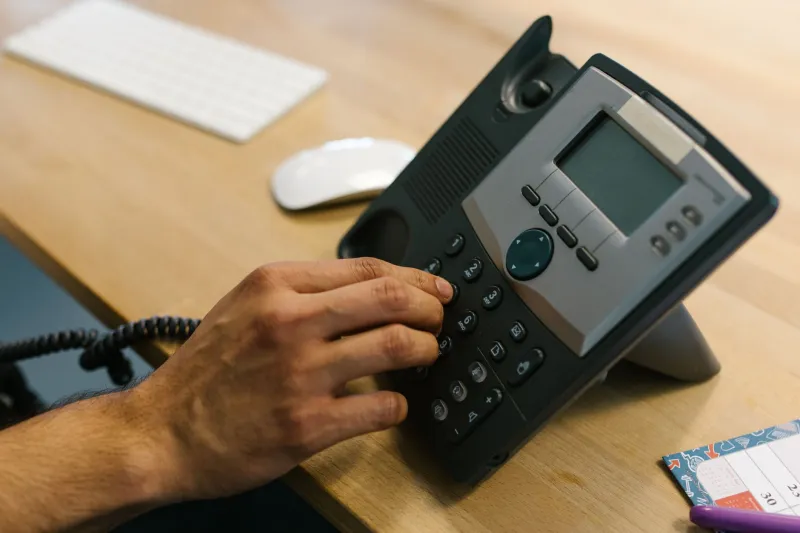
Photo: Betty Longbottom , CC BY-SA 2.0, via Wikimedia Commons
A power cut is rarely dramatic. It is usually just a click, a dark screen, and the slow realisation that the kettle, the Wi-Fi and the phone system have all gone quiet at once. For a UK support team, that quiet is the problem. Callers do not know the office has lost power. They just know nobody is answering.
Most small firms already have a plan for fire alarms and snow days. Far fewer have a plan for the humble dead socket. The good news is that you do not need an enterprise-grade bunker to keep a support number useful during an outage. You need a few sensible fallbacks, a clear message, and the discipline to test them before a storm does it for you.
Start with the honest question: what actually fails?
A modern UK phone line often depends on more than the handset on the desk. It may rely on a router, a cloud phone service, an internet connection and, in many cases, mains power. When one link goes, the whole chain can look broken to a caller.
So begin by listing the pieces that could fail separately:
- The office power supply.
- The broadband line or fibre connection.
- The router or phone gateway.
- The cloud phone provider or PBX service.
- The staff who normally answer calls.
That list matters because different failures need different answers. A broadband outage might leave mobile coverage perfectly intact. A power cut might take out the router but not the mobile network. A provider outage might affect only your VoIP service while the internet is fine. Treating every outage as one big blob leads to muddled fixes.
Mobile failover is not glamorous, but it works
The simplest backup is usually a mobile phone that is charged, switched on and known to the team. It does not need to be fancy. A dedicated handset with a UK SIM, kept in a drawer with a charger, can be the difference between a caller hearing a human and hearing nothing at all.
There are a few practical rules. Keep the handset charged and check it weekly. Label it clearly so nobody takes it home. Make sure the SIM has enough credit or an appropriate contract. And decide in advance who carries it or where it lives.
If your phone system supports mobile failover, use it. Many cloud phone services can forward calls to a mobile number when the main line is unreachable. Some can ring multiple numbers in sequence or at the same time. The aim is not to create a call centre in a rucksack; it is to give callers a route to someone who can help.
Forwarding needs a destination, not a hope
Call forwarding sounds simple until you ask where the calls should actually go. Forwarding to a number nobody checks is just a more expensive way of ignoring people.
Write down a short outage routing plan. For example: first try the office manager's mobile; if unanswered after 30 seconds, try the support lead's mobile; if still unanswered, play the outage message. Keep the list short and current. A chain of six numbers is not resilience; it is a treasure hunt.
Also check what your provider charges for forwarding and whether it works when the broadband is down. Some forwarding features live in the cloud and will keep working as long as the provider is up. Others depend on your local equipment. This is exactly the sort of detail worth confirming before you need it.
The recorded message should tell the truth
A pre-recorded outage message is one of the most underrated tools in UK customer support. It does not need a professional voice actor. It needs to be clear, calm and specific.
A useful message says three things: that you are experiencing a technical problem, what callers can do in the meantime, and when they should try again. Avoid vague phrases like “due to unforeseen circumstances” if you can. Callers are already dealing with a problem; they do not need a mystery.
Something like this works: “Thanks for calling. Our office phone line is currently affected by a power outage. If your enquiry is urgent, please call our mobile on 07xxx xxx xxx. Otherwise, please try again after 2pm, or email [email protected] and we will reply as soon as we can.”
Record it in advance, test it, and make sure the team knows how to activate it. If your provider lets you switch messages by phone or app, even better. The message should not be locked away in a login that only one person knows.
A simple test plan beats a complicated binder
Resilience plans often fail because they are written once and never touched again. A short quarterly test is more useful than a fifty-page document.
Pick a quiet afternoon and run a controlled check. Ask someone to call your main support number while you simulate a failure — for example, unplug the router for two minutes, or activate the forwarding rule manually. Confirm what the caller hears, how long it takes, and whether the fallback number actually rings. Then write down what happened.
Keep the test small. You are not trying to break the business; you are trying to find the gap between the plan on paper and the phone in reality. A five-minute check every few months will catch the common problems: a flat backup phone, an out-of-date mobile number, a forwarding rule that was never saved, or a recorded message that still mentions last year's storm.
Build the backup before the blackout
The point of all this is not to become obsessed with outages. It is to make sure that when the lights go out, your support line does not become a dead tone. UK callers are patient with honest problems. They are much less patient with silence.
So keep a charged mobile, write a short forwarding chain, record a plain-English outage message, and test the whole thing before you need it. None of that is glamorous. But it is the difference between a bad afternoon and a lost customer.